How PFAS Water Filtration Helps Remove Forever Chemicals from Drinking Water
You’ve likely heard “forever chemicals” in the news. It can seem unclear until you think about what’s in your kitchen tap water. PFAS (per- and polyfluoroalkyl substances) are a group of artificial chemicals. They can stay in the environment and in our bodies for many years. That’s why many homeowners are looking at PFAS water filtration. It’s a simple way to lower exposure in drinking and cooking water.
You’re not alone in figuring out test results or treatment options. Many people ask how a taste-improving filter differs from a PFAS-targeting filter. Here’s a simple guide for homeowners on PFAS water filtration. It explains how it works, what to look for, and how it fits into a bigger plan. This plan includes water testing and other indoor environmental services.
What PFAS are (and why they’re called “forever chemicals”)
PFAS can be used to make various products resistant to heat, oil, staining, grease, and water. Over time, PFAS chemicals can enter groundwater, rivers, and public drinking water sources through industrial operations, firefighting foam, landfills, and other sources. “Forever” compounds got such a name because of their slow degradation rate.
However, all PFAS are not the same. Two of the popular ones are PFOA and PFOS, but there are literally thousands of PFAS-related compounds. Due to their ubiquity and persistence, people often wonder, “Is PFAS in my water?” This is why water testing becomes the first, most useful step, especially if you’re on a private well, live near industrial areas, or just want clarity before investing in a system.
How PFAS water filtration removes chemicals forever
PFAS are challenging because they’re stable and can be present at very low levels. The good news is that certain technologies are specifically designed to reduce them. A PFAS filtration system typically relies on media that can capture PFAS molecules as water passes through, rather than simply improving taste or removing sediment.
In real-world terms, effective PFAS reduction usually comes down to a few key approaches:
- Adsorption (commonly with carbon-based media): PFAS compounds can bind to specialized media, reducing what makes it through to your faucet.
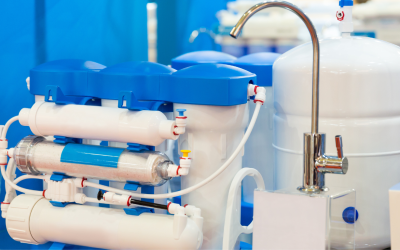
- Membrane separation (often through reverse osmosis systems): A membrane can physically reject many dissolved contaminants, including several PFAS compounds.
This is why “any filter” isn’t the same as a targeted solution. A basic pitcher filter might help with taste or chlorine, but PFAS water filtration is about choosing the right system, installing and maintaining it correctly, based on actual water conditions.
PFAS filtration systems vs. reverse osmosis systems: what’s the difference?
Homeowners often compare PFAS filtration systems with reverse osmosis systems, and it’s a fair question. Both can play a role, but they work differently and can be used in different ways depending on your goals.
PFAS filtration systems
A dedicated PFAS filtration system is designed specifically to reduce PFAS compounds using specialized filtration media. These systems are often selected based on:
- Your current PFAS levels (from water testing)
- Whether you want treatment at one faucet or for the whole home
- Water usage and flow rate needs
Reverse osmosis systems
Reverse osmosis systems use a semipermeable membrane to reduce many dissolved contaminants. People often choose RO for drinking and cooking water because it can address a broad range of issues. If PFAS is your main concern, RO may be part of the solution, but it’s still important to match the system to your water test results and household needs.
For most households, the solution is not either/or. The solution is to select appropriate filters based on your water chemistry, but you may have difficulty doing so accurately without first testing the water.
Start with water testing: the most actionable first step.
There is only one thing you must do before you start buying any equipment: test your water. Testing will turn your guessing into planning. Testing will tell you whether PFAS contamination is present and, at the same time, provide information on other issues that might be affecting filtration efficiency.
Here’s a simple, homeowner-friendly way to approach it:
- Test first to understand what’s in your water (and at what levels).
- Choose a treatment strategy that matches the results. This may involve PFAS filtration systems, reverse osmosis systems, or other water filtration systems.
- Maintenance plan to keep your system performing over time.
Testing also helps you avoid overbuying. For example, if your water is hard, pairing treatment with water softener systems can help protect plumbing and improve the performance of certain filtration components. It’s not that softening “removes PFAS,” but it can support the overall health and longevity of your water treatment setup.
How PFAS filtration fits into a whole-home environmental plan
PFAS filtration is just one aspect of an overall environmental solution to keep the entire home protected. Though PFAS filtration can make your water safe and pure, additional services may be required if you have different concerns. Water damage restoration may be performed if damage occurs due to flooding, leaks, or wet basements.
Air quality concerns are separate but often appear alongside water issues. Radon testing and mitigation, plus radon water filtration, lower indoor exposure. They also reduce the risks associated with well water. Fire damage restoration, smoke odor removal, and carpet cleaning make your home cleaner and healthier. They are important after leaks, smoke, or contamination.
What to expect after installing PFAS water filtration
Once a PFAS filtration system is installed, the goal is to reduce contaminants over time consistently. The key word is “consistent.” Filters wear out over time. Their performance relies on proper sizing, correct installation, and regular maintenance.
Homeowners can set themselves up for success by:
- Following recommended replacement schedules for filters or media
- Tracking changes in taste or flow, which can signal a maintenance need
- Retesting water periodically to confirm the system is doing its job
If you use reverse osmosis systems for drinking water, keep in mind that membranes need care. Pre-filters also need maintenance. Skipping maintenance can lower effectiveness and cause performance problems. This is especially true if your source water has sediment or high mineral levels.
Common misconceptions about PFAS and home filtration
Misinformation moves quickly since PFAS has become a hot topic recently. A couple of points can save you time and energy:
- “If my water tastes fine, it must be safe.” PFAS doesn’t reliably change taste, smell, or appearance. Testing matters.
- “Any carbon filter removes PFAS.” While some filters may remove certain PFAS, performance depends significantly on design. Therefore, the system should be built for PFAS removal.
- “A one-time fix is enough.” Water filtration for PFAS is an ongoing process. Routine maintenance and regular water testing can help maintain effectiveness.
It’s also important to separate water treatment from cleanup and restoration services. If you’ve had a contamination event like a sewage backup, filtration alone doesn’t “clean” the affected area; raw sewage cleanup and, when appropriate, biohazard cleanup are the right tools for that job.
PFAS can seem daunting. They are invisible, persistent, and often out of your control. But you can control what you drink. Test your water to make smart choices. Household Environmental can help you choose the right PFAS water filtration method, including PFAS filtration systems, reverse osmosis, or other options. This way, you can effectively reduce harmful chemicals at your tap for good. The best results come from picking the right water system and keeping it well-maintained. Treating water quality helps create a healthier home environment.
To stay updated with us, please follow our Instagram page.